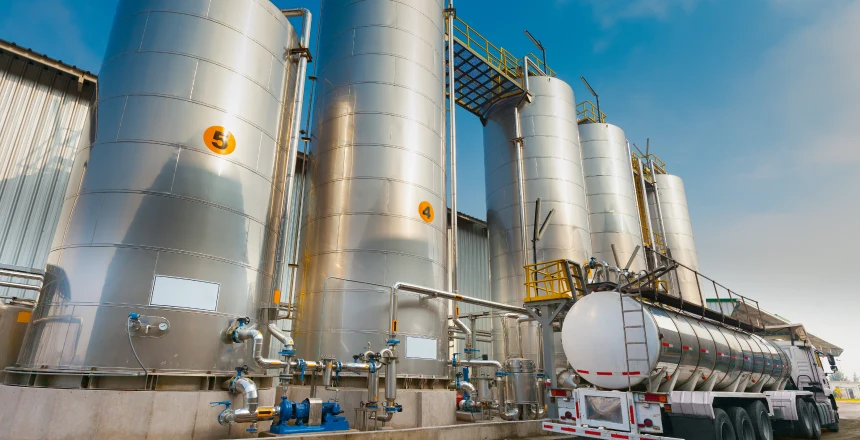
The transition toward cleaner energy, the large-scale expansion of petrochemical complexes, and the continuous upgrading of process-intensive industries have driven strong demand for corrosion-resistant, high-temperature, and high-pressure metal materials. Pipelines, reactors, heat-exchange systems, boilers, separators, and offshore platforms operate under extreme conditions—high temperature, high pressure, strong acids and alkalis, chlorides, and cyclic loads. Material selection is therefore crucial for safety, reliability, and service life.
We supply a full range of 304, 316L, 317L, 904L, 310S, 2205, 2507, and nickel alloys (Inconel series) for the energy and chemical sectors, covering plates, pipes, fittings, bars, forgings, flanges, and welding consumables.
Corrosion-intensive environments require premium alloys
Chemical pipelines transporting acids, alkalis, salts, and chlorides demand superior corrosion resistance. 316L and 317L are the mainstream choice for general corrosive environments. In severe conditions such as sulfuric acid and hydrochloric acid, 904L offers exceptional resistance to pitting and crevice corrosion.
For seawater, chloride-rich brine, desalination plants, and offshore structures, traditional austenitic stainless steels may suffer stress-corrosion cracking. In these cases, duplex stainless steels 2205 and 2507 are preferred for their high yield strength and superior chloride resistance.
High-temperature systems require heat-resistant alloys
Boilers, furnaces, and steam systems increasingly adopt 310S, 309S, and Inconel alloys to withstand elevated temperatures. 310S provides excellent high-temperature strength, while Inconel 600/625/718 maintains dimensional stability under both high-temperature and high-corrosion conditions—ideal for reactor tubes, furnace components, and high-temperature transfer systems.
Oil & gas operations rely on high-strength anticorrosion materials
Oilfield equipment must withstand CO₂, H₂S, saltwater, and extreme pressure. We supply 2205, 2507, Inconel 625, and Incoloy 825 for critical components such as wellheads, subsea lines, manifolds, separators, and high-pressure valves. These materials comply with NACE MR0175 / ISO 15156, ensuring safe operation under sour-gas conditions.
Material selection determines the safety of chemical plants and energy systems
Reactor linings, tanks, pipelines, and steam systems heavily depend on the durability of their metallic components. Our 316L/317L sheets, duplex plates, nickel-alloy tubing, and forged fittings can be tailored to project drawings with matching welding consumables (ER316L, ER2209, ERNiCrMo-3). These materials ensure system stability across thousands of thermal cycles.
⭐ Energy & Chemical Material Specifications
Corrosion-Resistant Plates
| Material | Thickness | Width | Application |
|---|---|---|---|
| 316L / 317L | 1.5–50 mm | 1000–2000 mm | Reactors, pipelines |
| 904L | 2–40 mm | 1000–1500 mm | High-corrosion media |
| 2205 / 2507 | 3–80 mm | 1000–2000 mm | Pressure vessels |
Heat-Resistant Tubing
| Material | OD | WT | Application |
|---|---|---|---|
| 310S / 309S | 10–120 mm | 1.0–12 mm | Boilers, furnace tubes |
| Inconel 600/625 | 6–89 mm | 1.0–10 mm | Heat exchangers |
Duplex Steel Pipe Fittings and Flanges
| Material | Standard | Form of Processing |
|---|---|---|
| 2205 / 2507 | ASTM A182 / A815 | Tees, Elbows, Reducers, Flanges |
💡Material Supply Chain as a Core Competitive Advantage
As the energy and chemical industries place increasing emphasis on safety, reliability, and regulatory compliance, a stable and resilient metal-material supply chain has become a crucial part of corporate competitiveness. Leveraging our global warehousing and logistics network, we provide customers with:
- Plate leveling, slitting, and plasma cutting
- Beveling and edge preparation for thick plates
- Tube straightening, cutting, and solution treatment
- Forging and machining of pipe fittings and flanges
- Matching welding consumables and full material certification (MTC 3.1)
From base materials to complete component sets, we deliver comprehensive material solutions for energy and chemical applications—ensuring long-term equipment stability and making materials a vital force in safe and reliable production.