With the global aviation industry accelerating its production recovery, the expansion of commercial aircraft, defense modernization, and rapid development of unmanned aerial systems and space exploration programs, the demand for high-performance metallic materials continues to rise. Higher thrust-to-weight ratios, lighter structures, extended fatigue life, and increased operational safety are the core development goals of modern aerospace engineering. Material performance has therefore become a primary source of competitive advantage.
We supply a comprehensive range of nickel-based superalloys, cobalt alloys, titanium alloys, stainless steels, and high-strength aluminum alloys, covering plates, sheets, bars, tubes, forgings, fittings, flanges, and matching welding consumables. Supported by a global warehousing network, we ensure reliable stock availability, rapid cutting services, and stable supply for aerospace R&D, prototyping, and serial production. All materials comply with AMS, ASTM, EN, GB/T, and other international aerospace standards, with full traceability documentation.
High-performance materials for building superior aircraft
The structural design of aircraft wings places extremely high demands on materials. Modern wings are fully metallic, with the internal spars—critical load-bearing members—commonly manufactured from extra-hard aluminum alloys, titanium alloys, or aerospace-grade structural steels. The joint between the wing spars and the fuselage typically uses high-strength steels or titanium alloys to withstand tremendous bending moments and cyclic loads. Wing skins use different materials for upper and lower surfaces: upper skins rely on ultra-hard aluminum for compressive strength, while lower skins require high-fatigue aluminum to resist tension during flight. To further reduce weight, wing leading and trailing edges often use aluminum honeycomb sandwich structures or composite materials, with titanium and high-strength aluminum as the essential metallic base.
The horizontal and vertical tail structures also rely heavily on hard aluminum, titanium alloys, and composite materials. For high-performance fighter aircraft, carbon fiber reinforced composites combined with titanium provide additional strength and weight reduction. Control surfaces such as rudders and elevators frequently use hard aluminum for its balanced machinability and fatigue resistance.
Metal solutions for pressurized fuselage structures
During high-altitude flight, the pressurized cabin is subjected to cyclical internal pressure, requiring fuselage skins to be made from high-tensile, high-fatigue aluminum alloys and selected titanium alloys. Fuselage frames and reinforcement ribs use extra-hard aluminum or high-strength steels to ensure long service life. For highly loaded structural frames, materials such as Ti-6Al-4V, 15-5PH, and 17-4PH stainless steels are widely employed for their excellent fracture toughness and resistance to fatigue cracking.
Radar radomes and antenna housings, typically made of glass-fiber reinforced composites for wave transparency, require internal metallic support rings and mounting interfaces made from precision-machined aluminum or stainless steel. We supply the full range of these materials and can support precision machining when required.
Extreme material requirements for landing gear systems
Landing gear systems endure impact loads measured in hundreds of kilonewtons—or even meganewtons—during touchdown. Therefore, main landing gear assemblies are manufactured using ultra-high-strength steels and titanium alloys, providing superior impact toughness and fatigue life. Nose landing gear, subject to lower loads, often uses high-strength aluminum alloys or alloy steels. The complex landing-gear support beam, connecting the wing to the gear assembly, uses titanium or high-strength aluminum to ensure durability and structural stability.
High-temperature alloys for aircraft engines
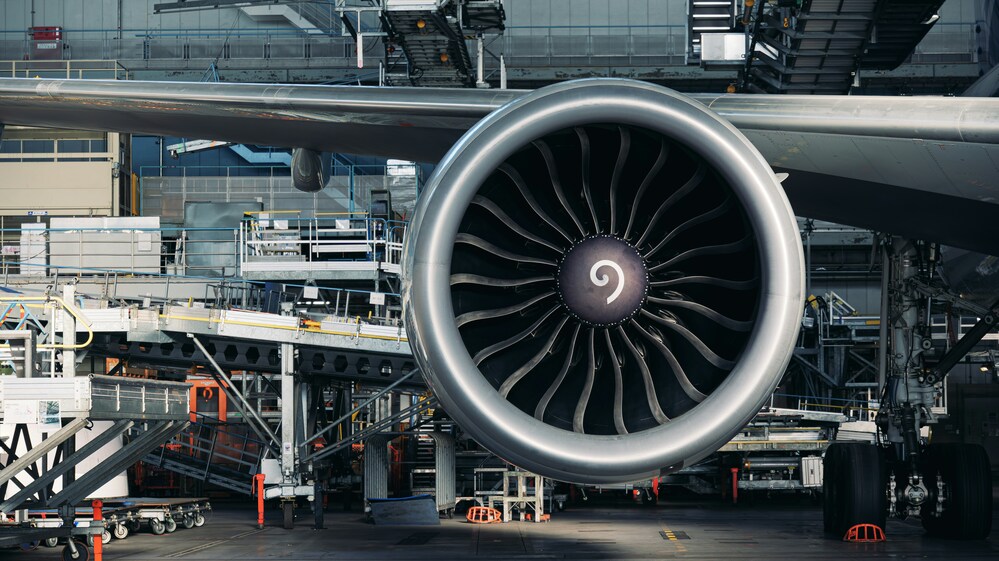
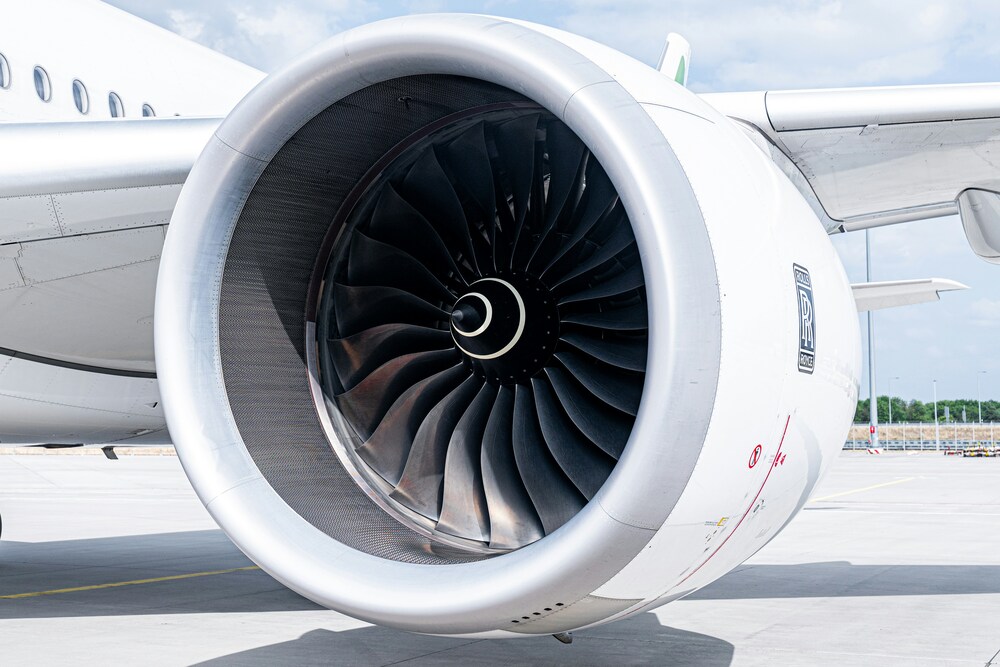
Turbine cases must withstand extreme impact loads in the unlikely event of blade fragmentation, demanding exceptional structural integrity. We supply Inconel nickel-based alloys, Waspaloy, and Ti-6Al-4V, ideal for turbine cases and high-temperature housings. Turbine disks and blades frequently use Inconel 718 or Udimet 720, offering outstanding creep resistance, oxidation resistance, and high-temperature strength.
Fuel and hydraulic lines require excellent corrosion resistance, cleanliness, and anti-vibration performance. Our 316L, 321, and 347 stainless-steel tubes are widely used in fuel distribution, bleed air, and cooling systems across modern aircraft platforms.
✨Aerospace Metal Material Portfolio (Full One-Stop Supply Support)
| Material Category | Typical Grades | Available Forms |
|---|---|---|
| Nickel-Based Superalloys | Inconel 600 / 625 / 718 / X750, Waspaloy, Udimet 720 | Plates, Bars, Tubes, Rings, Forgings |
| Titanium Alloys | Ti-6Al-4V, Ti-6Al-2Sn-4Zr-6Mo | Plates, Bars, Tubes, Forgings |
| Corrosion-Resistant Stainless Steels | 304L / 316L / 321 / 347 / 17-4PH | Plates, Bars, Tubes, Flanges |
| Aerospace Aluminum Alloys | 2024 / 7075 / 7050 | Sheets, Plates, Bars, Profiles |
| Welding Consumables | Full series corresponding to base materials | Welding Wires, Welding Rods |
We can supply materials in full compliance with AMS, ASTM, EN, GJB and other international aerospace standards. At the same time, we provide MTC 3.1 material certificates, traceable heat numbers, and complete quality-control documentation, ensuring full traceability and meeting the stringent requirements of aerospace manufacturing.
💡 One-Stop Aerospace Material Solutions
Supported by our global warehousing network, we maintain sufficient stock of both standard and customized specifications required by aerospace manufacturers, and we offer:
- Plate leveling and heavy plate cutting
- Tube straightening, solution treatment, and polishing
- Bar sawing and precision machining
- Customized flange and forging production
- Complete welding consumable support
By integrating global resources and optimizing the supply chain, we help customers reduce procurement costs, improve assembly efficiency, and transform material sourcing into a true competitive advantage.